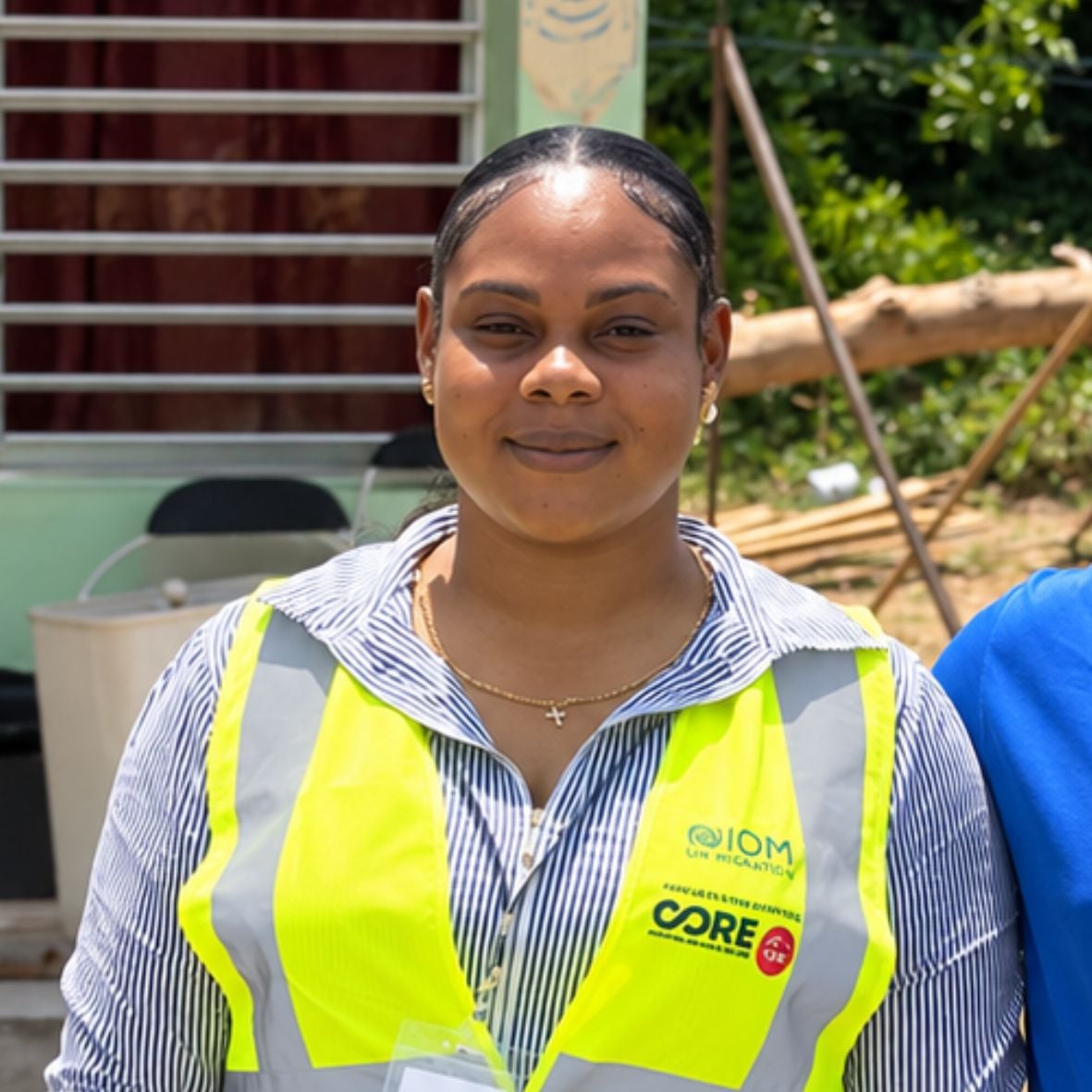
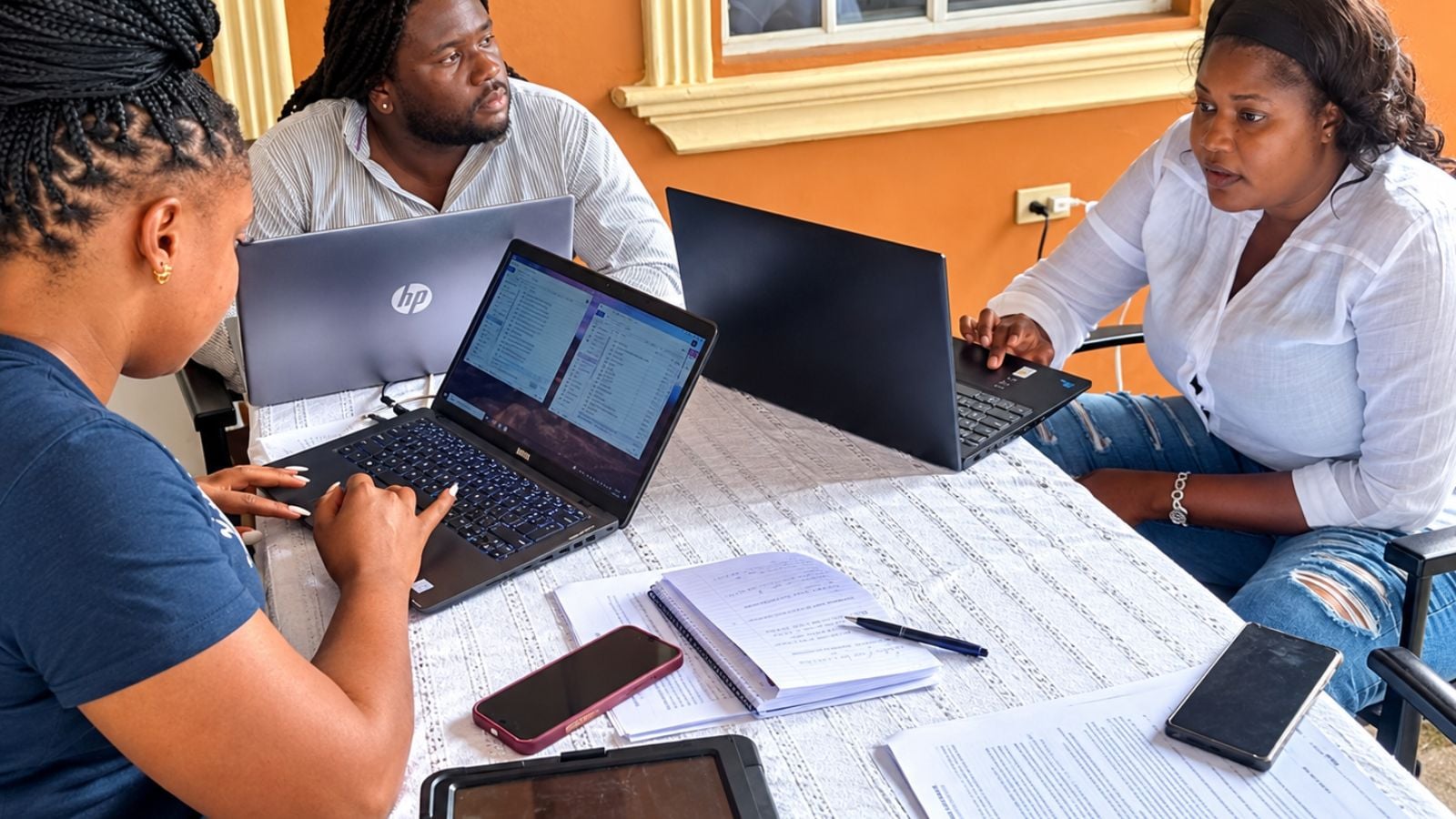
After Hurricane Melissa damaged her own home in Black River, Tian Smith joined GER³’s Jamaica response. Tian, pictured above on the left, reflects on rebuilding her life while helping other families recover, and why local knowledge matters in disaster response.
After Hurricane Melissa
When Hurricane Melissa tore through Black River, St. Elizabeth, it changed my life in ways I could never have imagined. I am the mother of a three-year-old daughter, and watching our home being torn apart before our eyes was heartbreaking. Home should be where a child feels safest, but in those moments, that sense of security disappeared.
We were fortunate to be unharmed. But when the storm passed, I was left trying to repair our home while keeping life moving for my daughter. With the limited resources I had, I was able to begin rebuilding little by little. But once I started working in hurricane-affected communities, I quickly realized that many families had no way to begin on their own.
Some were older people. Some had very limited incomes. Others were physically unable to carry out repairs themselves or did not have the materials, labor or technical knowledge they needed. That difference has stayed with me.

Tian Smith cleans her home in Black River, St. Elizabeth, following Hurricane Melissa. Photo: Esmine Remekie
Turning personal hardship into purpose
Shortly after the hurricane, I became the first local team member to join GER³ in Jamaica. At the time, I was still dealing with the impact of Melissa on my own home. But joining GER³ gave me an opportunity to help other families experiencing many of the same challenges I was facing.
I started as a Project Field Support Officer, supporting debris clearance and community outreach before becoming involved in shelter recovery activities. Being from Black River meant I understood the community and surrounding areas in ways that someone arriving from outside could not immediately know.
I knew the communities, their cultures and local connections. I understood where people gathered and knew some of the community and government contacts who could help move the response forward. As GER³ expanded its work, I helped the team navigate communities, connect with local stakeholders and better understand the needs people were raising directly.
That experience showed me how important local knowledge is in humanitarian work. A program may bring funding, systems and technical resources, but relationships and trust often determine how effectively that support reaches people.

Tian Smith assists a participant during a GER³ shelter voucher distribution in Jamaica. Photo: GER³
Seeing recovery differently
Working across affected communities also changed how I understood the impact of Hurricane Melissa. Every damaged roof, debris-filled yard and family trying to regain a sense of normalcy reminded me that my own experience was part of something much larger.
Because my home had also been damaged, I understood some of the frustration and uncertainty people were feeling. But I began to see how much harder recovery could be for someone without the resources to move forward on their own.
Through GER³’s debris and shelter program, I watched teams clear communities, provide households with building materials and help families complete repairs they might not otherwise have been able to undertake. For many people, that support meant much more than completing a task.
Clearing debris from a property could allow a family to move safely around their home again. A repaired roof could mean no longer worrying every time rain started falling. Sometimes, assistance also reassured someone that their circumstances had been seen and that they had not been forgotten.
That is the part of humanitarian work that has meant the most to me.
Growing alongside the response
My journey with GER³ has also been one of professional growth. I joined as the first local team member in Jamaica and was later promoted to Lead Projects Officer. That progression means a lot to me because it reflects both the responsibility I have been given and everything I have learned throughout the response.
I have gone from helping GER³ understand communities in and around Black River to supporting program implementation, outreach, coordination and field visits with partners. I have also had the opportunity to help represent work that I watched grow from the beginning.
But what I value most is knowing that the work is connected to places and people I know. I am not working in an unfamiliar community and then going home somewhere else. This is where I am from.
Many of the people we support are fellow Jamaicans whose communities were affected by the same hurricane that affected mine. That makes the work personal.

Tian Smith (left) with an International Organization for Migration (IOM) representative during a shelter field visit in Jamaica. Photo: GER³
Why I keep going
My recovery story is not the same as everyone else’s. There are still people living with damaged homes and making difficult decisions about what they can afford to repair first. Older people, low-income families and other households facing greater barriers to recovery may need support for much longer.
Seeing those realities motivates me to continue. Hurricane Melissa brought unexpected challenges into my life, but it also led me toward work that has given me a stronger sense of purpose and a new direction professionally.
My story is therefore not only about what I lost during the hurricane. It is also about what I found afterward: an opportunity to grow, to serve, to strengthen the response in the place I call home, and to stand alongside families who are still working to put their lives back together.
There is still much more work to do in Jamaica, and I want to keep standing alongside families as they rebuild. The needs we continue to see are a reminder that recovery does not end when the emergency phase does. With sustained support from donors and partners, local teams like ours can continue helping families move from temporary fixes toward safer, more stable recovery.
GER³ implemented the debris and shelter programs described above in partnership with the International Organization for Migration (IOM).
Your support can help GER³ continue recovery and resilience work with communities across Jamaica.