Our work /
Our approach
We listen first, understand the context, and bring the right expertise to the challenges each community faces.
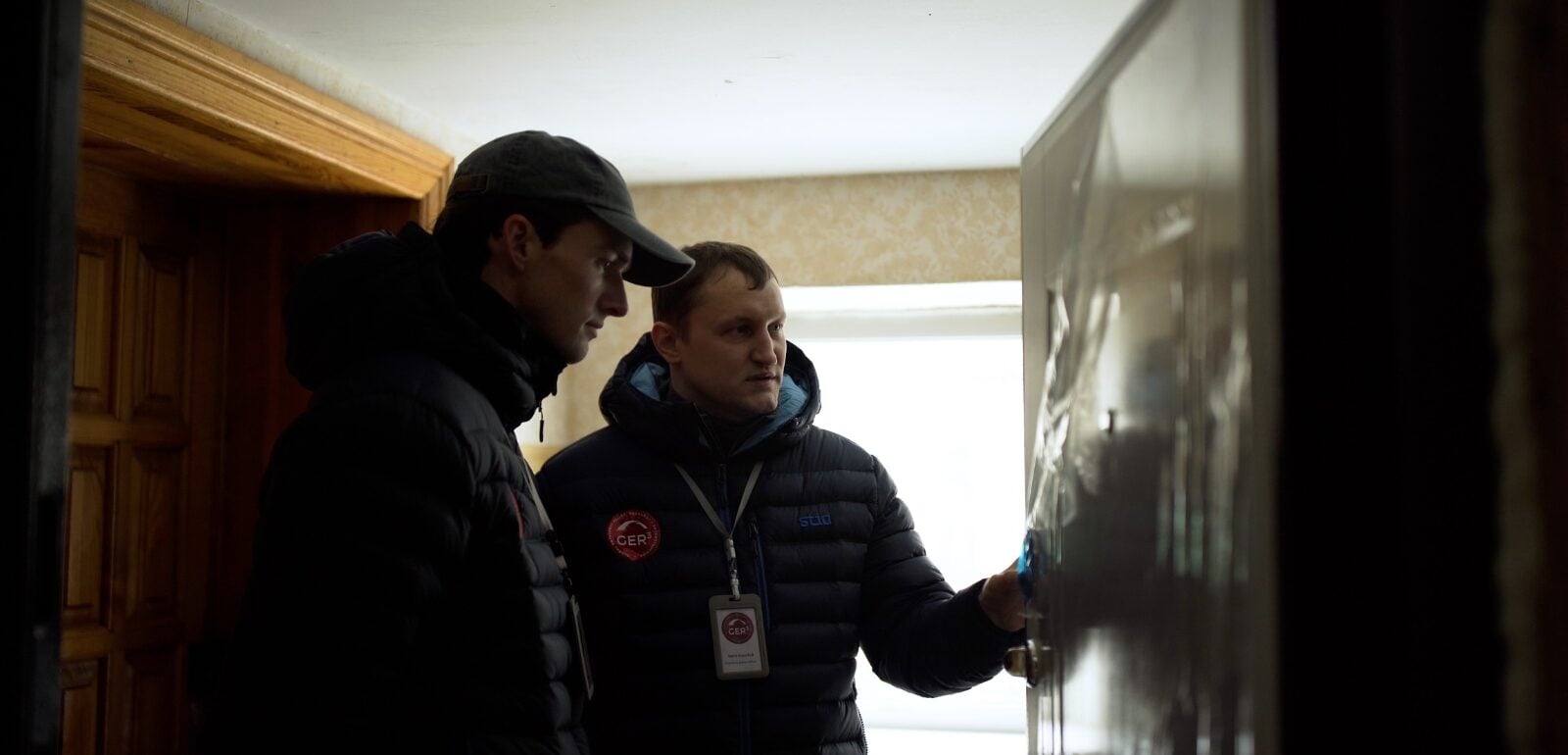
GER³ staff members assess damage inside a home in Ukraine during a site visit. Photo: GER³
How we work
No two disasters create the same set of challenges, and no two communities begin recovery from the same place. Geography, infrastructure, local institutions, markets, culture, technical capacity and the nature of the damage all influence what is possible and what will work. We build our work around the realities of each context, combining local knowledge with technical expertise to make decisions that are timely, practical and grounded in what communities actually need.
Principles of practice
Context shapes our response
Effective recovery begins with understanding the environment in which it must take place. A solution that works in one community may be inappropriate, unaffordable or impossible to sustain in another. We consider the wider system around every intervention, including local capacity, access to materials and labor, existing services, institutional relationships, environmental conditions and future hazards. This allows us to design programs for the place they are intended to serve, rather than adapting the place to fit a predetermined program.
Communities are partners in recovery
People affected by disaster are not passive recipients of assistance. They hold essential knowledge about their homes, neighborhoods, livelihoods, risks and priorities, as well as the practical constraints that outside organizations can easily overlook.
GER³ brings technical expertise to that knowledge rather than substituting for it. By working closely with communities, local leaders and organizations, we make better decisions about what to prioritize, how to deliver it and what will remain useful long after a project is complete.
Urgency with discipline
In the aftermath of a disaster, time matters. Delays can prolong displacement, restrict access to essential services and allow temporary problems to become entrenched. But speed alone is not a measure of an effective response.
GER³ is structured to move quickly while maintaining the technical judgment, consultation and oversight that responsible recovery demands. We make decisions with the best information available, test assumptions against conditions on the ground and continually reassess as those conditions change. The objective is not simply to act fast, but to make the right decisions at the moment they matter most.
Technical expertise, applied pragmatically
Recovery takes place in imperfect conditions. Materials may be scarce, supply chains disrupted, skilled labor limited and formal systems under enormous pressure. Technical standards matter, but so does understanding how to apply them intelligently within those constraints.
GER³ combines expertise in engineering, construction, shelter, debris management and reconstruction with a practical understanding of implementation in complex environments. We work with local materials, skills, building practices and resources wherever appropriate, developing solutions that are technically sound, achievable and suited to the realities in which they must function.
Strengthening what already exists
Disasters can draw large amounts of external assistance into a community at precisely the moment when local businesses, workers and institutions are struggling to recover. Wherever possible, GER³ works through and alongside existing local capacity rather than creating parallel systems.
We procure locally when it is responsible to do so, employ and train people from affected communities, work with local contractors and tradespeople, and coordinate with authorities and community organizations. This approach keeps more of the value of recovery within the local economy, strengthens skills and institutions, and reduces dependence on systems that disappear when international assistance leaves.
Rebuilding with future risk in mind
Reconstruction should not simply reproduce the vulnerabilities that existed before a disaster. The way a building failed, the areas that flooded, the materials that performed poorly and the systems that stopped functioning all provide important information about future risk.
GER³ incorporates those lessons into recovery wherever possible. We apply appropriate improvements in design, construction and risk reduction so that homes and community infrastructure are better prepared for the hazards they are likely to face. The aim is not reconstruction for its own sake, but recovery that leaves communities safer than before.
Adapting as recovery evolves
Needs after a disaster do not remain static. What is essential in the first week may be less important a month later, while new barriers to recovery emerge as communities begin returning home, reopening businesses and restoring services.
For GER³, adaptation is not an exception to the program. It is part of how the program is managed. We continue to listen, assess and learn throughout implementation, adjusting priorities and resources as the context changes. This allows our work to remain relevant rather than being bound to assumptions made at the beginning of a crisis.
Accountable for the quality of our work
Humanitarian action carries a responsibility to the people it is intended to serve and to those who make it possible. That responsibility extends beyond delivering activities or spending funds as planned.
GER³ places importance on technical quality, safeguarding, transparency, responsible use of resources and meaningful monitoring of results. We ask whether our work is solving the problem it was designed to address, whether it is reaching people fairly, whether resources are being used well and whether communities themselves consider the outcome valuable. Because ultimately, the measure of a successful intervention is not what was delivered, but what it made possible.