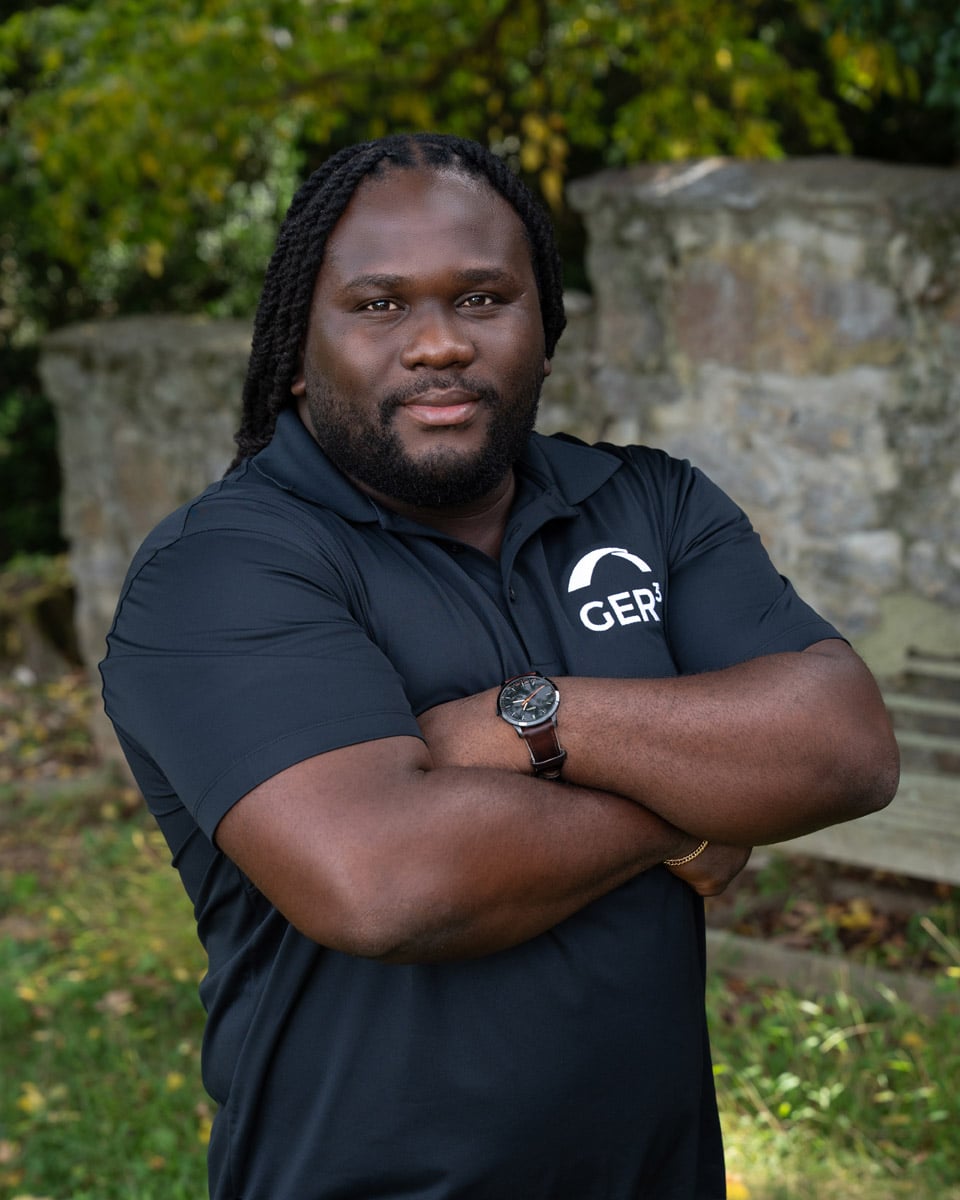
Nickles Saintil, GER³’s Program Manager in Jamaica, reflects on the people, partnerships and lessons behind GER³’s Hurricane Melissa response, and why the work is not finished.
When Melissa hit
When I arrived in Jamaica on October 31, 2025, just days after Hurricane Melissa, we did not yet have the large programs that would follow. We were a small team trying to understand where we could be most useful: learning the area, buying tools, meeting local organizations and listening to communities that had just lived through a Category 5 hurricane.
What became clear very quickly was that recovery would not happen through one type of assistance. Communities needed debris cleared, livelihoods restarted, homes repaired, materials made accessible and people given the opportunity to take part in their own recovery.
That early work eventually grew into larger debris and shelter programs with the International Organization for Migration (IOM). But some of the moments I remember most are still from those first few weeks.

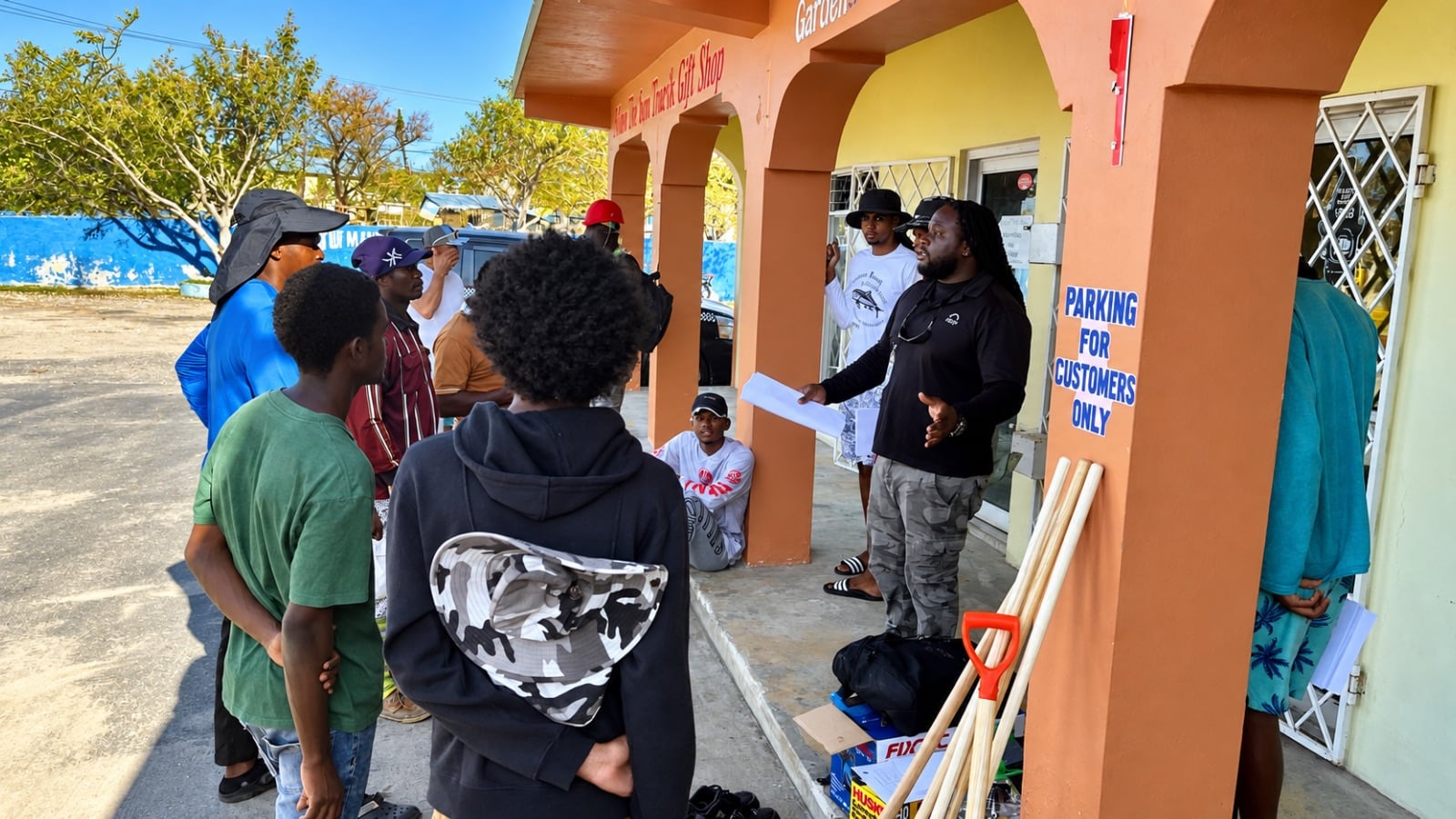
Thierry Schweitzer (front row, third from left) and Nickles Saintil (front row, fourth from left) with GER³ team members and community residents during Hurricane Melissa recovery activities in St. Elizabeth. Photo: GER³
When clearing one space unlocks something bigger
One of those places was Frenchman’s Bay in St. Elizabeth. The hurricane had left boats, trees and debris across the beach. Working alongside local cash-for-work crews and other responders, we began clearing the area and freeing fishing boats from the debris.
What stayed with me was what happened afterward. Once the beach was usable again, the Jamaica Defence Force was able to use that same space for several community-wide distributions. Fisherfolk were also able to get boats back into use and begin returning to their livelihoods.
That changed the way I thought about debris work. Clearing a site is not only about removing what a storm left behind. Sometimes it is about making the next stage of recovery possible.

Local cash-for-work crews clear storm debris and work together to free fishing boats at Frenchman’s Bay in St. Elizabeth. Photo: GER³
A local team rebuilding its own communities
One of the things I am most proud of is the team we built in Jamaica. I initially deployed alongside my former colleague, Aliisa Paivalainen, who was with me for the first two weeks. Thierry Schweitzer later joined the response in early February. Since his departure, I have been the only international member of the program team based in Jamaica. The people delivering the work day to day are Jamaicans, many from the same communities affected by Hurricane Melissa.
Some were dealing with damage to their own homes and challenges affecting their own families while helping other people recover. That brought a level of commitment to the work that is difficult to capture in program numbers. We exceeded several of our targets, but those results came from a local team that cared deeply about the communities we were working in and kept pushing even when implementation became difficult.
I would love to keep that team together. We have built local field experience, technical capacity, community relationships and trust that can continue serving Jamaica long after one project ends.
Recovery built by neighbors
Across the debris program, GER³ engaged 488 unique cash-for-work participants. Together, teams cleared 129 public and community debris sites, handled 814 debris piles from CORE-supported homes and completed 667 truckloads, removing an estimated 7,499 cubic meters of debris across St. Elizabeth and Westmoreland.
The shelter program built on the same idea of community participation. A total of 1,146 unique households received shelter vouchers, every issued voucher was redeemed, and cash-for-work-supported teams completed 179 light repairs and 40 heavy repairs, covering 219 homes in total. The shelter program also engaged 316 local cash-for-work participants, almost two-thirds of them women.
For me, cash-for-work was never only a labor mechanism. People told us the income helped them buy food and school supplies, cover transportation and medical needs, and manage household expenses while recovering from the storm. One participant told us it helped her continue her nursing studies while also beginning repairs to her hurricane-damaged home. Those are the stories that make the numbers real.

A GER³ cash-for-work-supported repair team strengthens a hurricane-damaged home in St. Elizabeth following Hurricane Melissa. Photo: GER³
Dignity is part of delivery
Achieving outputs matters, but it has never been the only measure of success for me. It matters how people are treated while receiving assistance. It matters that workers are paid on time, that an older person or someone with a disability is not excluded because they cannot easily reach a distribution point, and that beneficiaries feel comfortable asking questions or raising a concern.
During the shelter program, our team delivered vouchers directly to some people who could not travel and helped arrange transportation for others with mobility constraints. In the final post-distribution monitoring, 99.7% of surveyed households said they felt respected throughout the assistance process, and 99.9% knew how to raise a complaint or concern.
That is important to me because disasters can put people in situations they never imagined they would face. Needing assistance should never make someone feel like a number or a checkbox on a form. The human side of recovery has to remain at the center of how we work.
Building back safer
Repairing a roof is only part of the job if the next storm can take it away again. We therefore paired shelter assistance with practical Build Back Safer guidance on roof framing, hurricane clips and straps, roofing screws and safer material choices.
The program documented 6,092 household-equivalent contacts through voucher distributions, door-to-door visits, hardware-store outreach, cash-for-work activities, non-food item (NFI) distributions and organized community sessions. Additional Build Back Safer outreach extended the program’s documented footprint to more than 20 community and outreach locations across St. Elizabeth.
What I liked most about this approach was that the guidance was practical. We used demonstration models, showed people the hardware and techniques directly, and repeated the messages in the places where people were actually buying materials and making repair decisions.
What the numbers do and do not tell us
The final results were encouraging. Among 743 households surveyed after the voucher program, 98% were satisfied with the assistance, 91.4% reported improved living conditions and 78% reported access to a basic, safe and dignified shelter solution.
But good results do not mean recovery is finished. Twenty-eight percent of surveyed households said the materials they received were not enough to complete all the repairs their homes required. We also registered and assessed more households than the program could ultimately support.
That is one of the realities of disaster recovery: the emergency may disappear from the headlines long before families have finished rebuilding.
What comes next
The completed IOM programs showed what can happen when debris clearance, shelter materials, skilled labor, local employment and safer-building guidance are connected rather than treated as separate pieces of recovery.
GER³ is now developing the next phase of shelter recovery in Jamaica, with the aim of reaching households that still need meaningful repair support. We are also developing proposals to strengthen schools and emergency shelters through solar energy and other resilience upgrades, while continuing to build relationships with organizations that want to invest in Jamaica’s longer-term recovery.
For me, the opportunity now is not to start again from zero. We already have a trained local team, community relationships, practical systems and lessons from nearly a year of work. With the right partners, we can build on that foundation and keep supporting communities in ways that are practical, respectful and designed to leave them stronger for the next storm.
The targets matter. The numbers matter. But the real measure of the response is whether someone felt supported, respected and a little more able to move forward after one of the hardest moments of their life.
GER³ implemented the debris and shelter programs described above in partnership with the International Organization for Migration (IOM).
Your support can help GER³ continue recovery and resilience work with communities across Jamaica.