Past responses /
The Bahamas
GER³’s response to Hurricane Dorian grew from immediate recovery support into a five-year program of rebuilding and resilience.
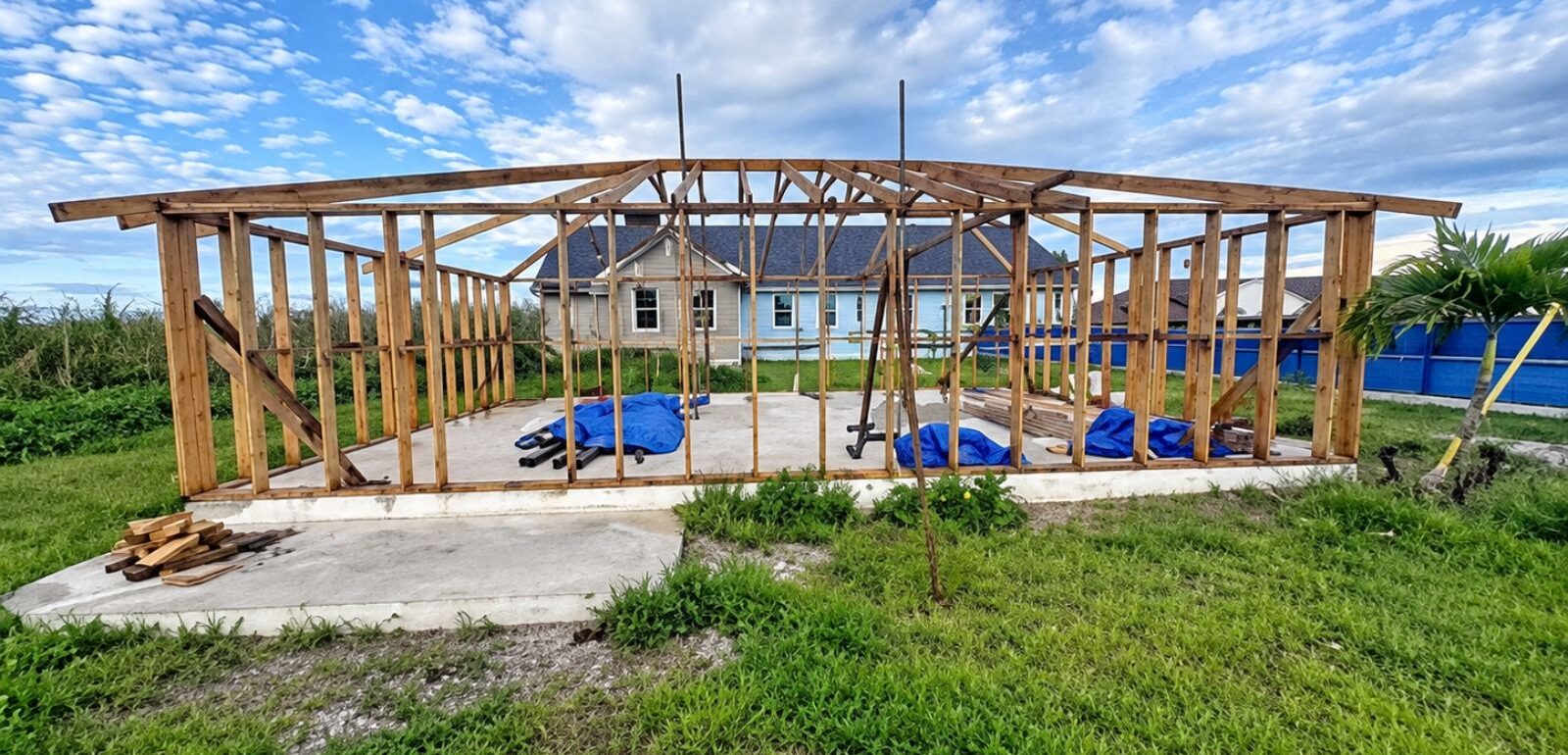
A home under reconstruction in Abaco as part of GER³’s long-term Hurricane Dorian recovery and resilient housing program. Photo: GER³
Overview
Hurricane Dorian struck the northwestern Bahamas in September 2019, causing catastrophic damage across Abaco and Grand Bahama. Homes, schools, businesses and essential infrastructure were destroyed or severely damaged, while widespread flooding and debris displaced families and disrupted communities across both islands.
GER³ deployed to Grand Bahama in the immediate aftermath of the hurricane, initially focusing on debris removal, damaged homes and getting schools safely reopened. As recovery needs evolved, our work expanded to Abaco and developed into a five-year program focused on rebuilding homes and schools, strengthening hurricane preparedness, creating local employment and helping communities become more resilient to future disasters.
Across the response, GER³ supported the reconstruction and improvement of more than 200 homes and 10 schools, while working with local contractors, cash-for-work teams, government agencies and community organizations to ensure recovery was locally led and built for the long term.
General focus areas
Homes and resilient reconstruction
For many families, the housing crisis continued years after Hurricane Dorian. Some of the most vulnerable homeowners remained unable to safely return home long after the immediate emergency had passed.
GER³ supported housing recovery in Grand Bahama before developing a multi-year vulnerable housing rehabilitation program in Abaco. Homes were selected in close consultation with communities, with priority given to households facing significant barriers to recovery, including people with disabilities, single-parent families, low-income households and those living in unsafe or temporary conditions.
Repairs went beyond restoring homes to their pre-hurricane condition. GER³ incorporated more resilient construction techniques, including hurricane straps and clips and improvements designed to strengthen homes against future storms.
The program continued through four phases, with the final phase launched in 2024 and focused on the rehabilitation and reconstruction of a further 22 homes. The work was led by GER³’s local team, continuing an approach developed throughout the response that combined safer housing with employment, training and investment in the local economy.
Schools and education recovery
Restoring education was an immediate priority following the hurricane.
In Freeport, GER³ cleared, repaired and rehabilitated seven public schools and eight teachers’ homes, helping thousands of children return to the classroom. Local cash-for-work teams and contractors supported debris clearance, cleaning, mold remediation and longer-term repairs across affected school sites.
In Abaco, GER³ led the full rehabilitation of Central Abaco Primary School, the island’s largest public primary school. The badly damaged campus was rebuilt with new roofing, hurricane strapping, improved sanitation and other resilience measures. The school reopened to students and faculty in April 2021 after having been closed since Hurricane Dorian.
The rebuilt school was also upgraded to meet official hurricane-shelter standards, creating space for up to 1,200 people during future emergencies. GER³ also supported the rehabilitation of Every Child Counts in Marsh Harbour, a school serving children and adults with disabilities.
Hurricane preparedness and safer communities
Reconstruction provided an opportunity not only to repair damage, but to reduce the risks communities would face during the next hurricane.
GER³ rehabilitated four key hurricane shelters in Abaco, provided emergency shelter supplies and supported training for local shelter managers. Homes, schools and community facilities were repaired with greater resilience and preparedness in mind.
GER³ also identified gaps in local construction knowledge and delivered public training in hurricane-resistant building techniques, including the correct installation of hurricane straps and clips. The aim was to leave practical knowledge within the community that could continue strengthening homes long after GER³’s response ended.
Debris management and early recovery
GER³’s response began with the urgent work required to make damaged communities safe and accessible.
In Grand Bahama and Abaco, teams removed debris, cleared flooded buildings, carried out muck-and-gut work and addressed widespread mold in homes, schools and businesses. Where possible, materials were recovered for reuse or recycling rather than being discarded.
In East Grand Bahama, the work was led alongside affected community members and combined debris management with repairs to vulnerable homes. In Abaco, GER³ also cleared two schools and eight teachers’ homes and trained 15 local participants to become fully certified in mold remediation.
This early recovery work helped create the conditions for families to return, schools to reopen and longer-term reconstruction to begin.
Local livelihoods and capacity building
Local employment and skills development were integrated throughout GER³’s Bahamas response.
Rather than relying solely on outside labor, GER³ employed Bahamian contractors and cash-for-work teams, many of whom had themselves been affected by Hurricane Dorian. Workers gained income while rebuilding their own communities and developed practical skills in areas including roofing, carpentry, painting, mold remediation and resilient construction.
During Phase III of the Abaco housing program alone, 22 cash-for-work team members completed more than 20,000 hours of work, while more than 85% of project funding was spent locally.
During Phase IV, the local cash-for-work team had already completed more than 25,000 hours of labor by September 2024, with additional skills training in countertop construction, cutting and installation.
By investing in local people, suppliers and businesses, the response aimed to make reconstruction itself part of the recovery.